
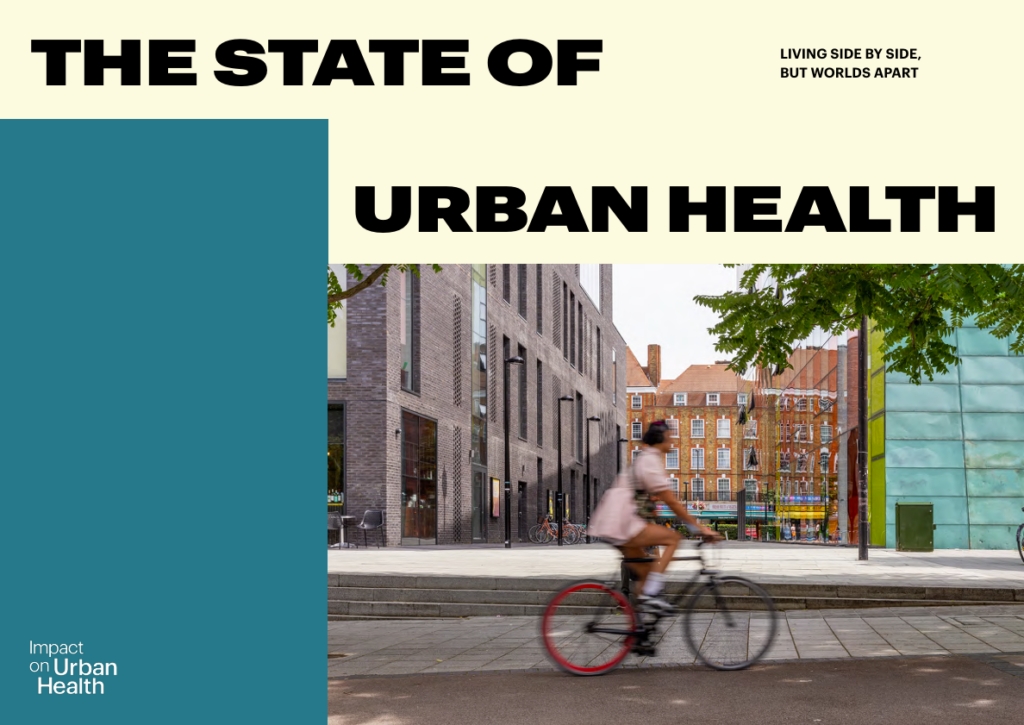
Impact on Urban Health have released their latest England wide report – ‘The State of Urban Health’.
They say: “Urban areas are home to more than eight-in-ten people in England. They are centres of diversity, opportunity, and growth. But they are also where health inequalities are most concentrated, complex and persistent.”
Findings include:
- People living in urban areas can expect to live, on average, two years less than those in rural areas.
- Preventable mortality is around 10% higher than the national average.
- Serious illness is more common.
- Poverty is one of the most powerful drivers of these inequalities — and it is more prevalent, more extreme, and more concentrated in urban areas.
- Inequalities for people who experience racism persist across multiple outcomes related to health, including child mortality, housing, and employment, where people from minoritised ethnic groups experience worse outcomes.
- Many people are living in conditions that actively harm their health: Overcrowding is higher; Homelessness rates are higher; Healthy food is often inaccessible or unaffordable; Air pollution is a major health risk.
The authors conclude that: “Urban health inequalities are not inevitable — they are systemic and preventable.”