
Ground surface:
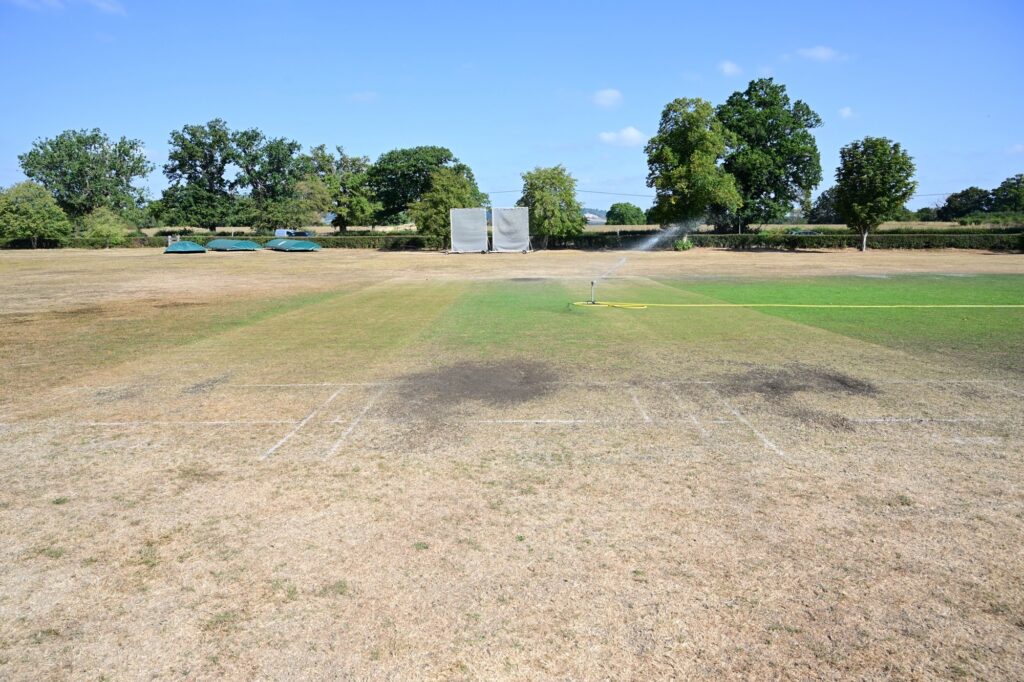
In our previous article, we looked at how rising temperatures, the urban heat island effect and heatwaves can dry out the ground. This matters for sport and physical activity because dry conditions can make grass pitches and other surfaces harder, increasing the risk of injury and making facilities less usable.
Trees and green spaces can help. Vegetation naturally retains moisture and provides shade, helping to keep surrounding areas cooler. Research by SUGi, comparing temperatures in central London, provides a clear example of the cooling effect trees and vegetation can have.
This raises a simple question: could we do more to surround children’s play areas, sports facilities and pitches with green space to help keep them cool?
The impact of dry conditions is already being seen. Football matches have recently been postponed because pitches have become ‘rock hard’, while more than two-thirds of England is now officially in drought. Maintaining grass pitches during prolonged dry periods is becoming more challenging, particularly when there is limited water available for irrigation.
Other sports are already looking at how to adapt. British horseracing, for example, is developing measures such as improved water storage, irrigation and water management to help make the sport more resilient.
But the challenges do not stop at the pitch.
What happens beneath our feet?
London’s ground is predominantly clay, which expands and contracts as conditions become wetter or drier. During heavy rainfall, clay’s low permeability can slow drainage and increase the risk of surface water flooding. During prolonged heat and dry weather, clay can shrink and crack, increasing the risk of subsidence and damage to buildings.
This matters for sport because many of London’s sports facilities and buildings are older, with some dating back many decades. Extreme weather could place additional pressure on ageing facilities, pitches and surrounding infrastructure if they are not adapted or maintained for a changing climate.
The risks are not evenly distributed. The GLA’s climate risk mappingidentifies several inner London boroughs, including Westminster, Southwark, Tower Hamlets, Lambeth, Hackney and Camden, alongside parts of east London, as having higher levels of surface water flood risk. Some of these areas also have high levels of deprivation.
This creates a wider challenge for physical activity. The places where people live and exercise need to remain safe, accessible and usable as our climate changes.
What can we do?
Our previous work on leisure centre sustainability and discussions with London’s local authorities highlighted several actions that could help:
- Understand local risks by reviewing energy use, decarbonisation, sustainability and climate risks to identify the interventions needed at individual sites.
- Design for change by considering how new and refurbished facilities can be adapted more easily as temperatures and weather patterns change.
- Make adaptation possible by raising awareness of funding opportunities and seeking investment at both local and national level.
- Prioritise areas at greatest risk by focusing adaptation efforts on places facing higher risks of flooding, overheating and subsidence, particularly where climate risks overlap with deprivation.
Climate adaptation is not simply about protecting buildings and pitches. It is about protecting London’s ability to stay active.
If we want future generations to have equal opportunities to play, exercise and participate in sport, we need to make sure the places they use can withstand the weather we are increasingly experiencing.