
The second report in Trajectory and Pragmatix Advisory’s Britain and the Fertility Crisis series examines how economic pressures and increasingly divergent political and social attitudes among younger men and women may be influencing relationship formation, decisions about having children, and future fertility rates in the UK.
Financial pressures are the leading explanation for why people are having fewer children (and these pressures are magnified in London), the research highlights how changing social attitudes could create additional barriers, with potential long-term implications for the UK’s population and economy.
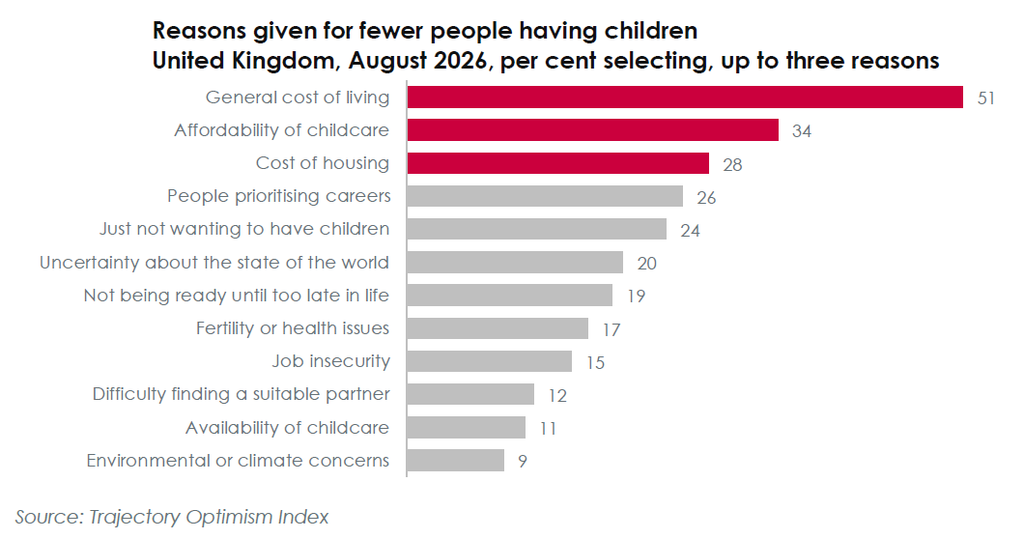
- Financial pressures remain the biggest barrier to having children. In a survey of 1,500 UK adults conducted in August 2026, 51% identified the general cost of living as a reason for lower birth rates, followed by childcare affordability (34%) and housing costs (28%). These findings suggest that the rising cost of everyday life, housing and childcare continues to play a significant role in shaping decisions about forming relationships and starting or expanding a family.
- Younger generations are experiencing a widening gender divide. Analysis of voting intentions found that men aged 16 to 20 were almost twice as likely as women of the same age to say they would vote Conservative or Reform UK (48% compared with 25%). The report suggests that growing differences in social and political attitudes may make it more difficult for some young people to form long-term relationships, particularly if these divides continue to widen over time.
- The impact could be felt for generations to come. The report estimates that the UK fertility rate will remain at around 1.4 children per woman, below the 2.1 needed to maintain the population without migration. Over time, fewer people entering the workforce could mean less tax revenue to fund public services. The report suggests that the economic consequences of a smaller working-age population, including increased pressure on public finances and public services, could begin to emerge from the late 2060s.
This article can be found here – Britain’s Fertility Crisis | Part 2: The Gender Values Divide | Trajectory