
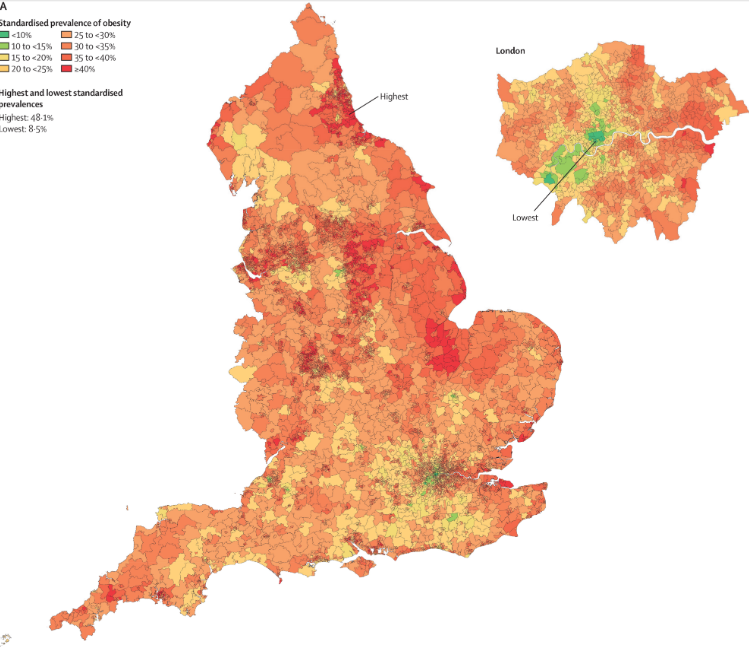
New research published in The Lancet on 24th June 2026 shows that obesity is becoming more common in England, especially among younger adults. Almost 1-in-3 adults now live with obesity.
Researchers looked at health records from 54 million adults in England between 2019 and 2025.
Overall
- In 2025, about 30 out of every 100 adults had obesity. In 2019, it was about 26 out of every 100 adults.
- Obesity is now more common than high blood pressure and almost three times more common than smoking.
Money and where people live
- Obesity was most common in areas where people have less money.
- These areas also saw the biggest increases over the study period.
- People living in the poorest areas were more likely to have obesity than people living in the wealthiest areas.
- The link between poverty and obesity may work both ways. Poverty can make it harder to live healthily, and obesity can also make life more difficult.
Sex and Age
- Women were more likely than men to be diagnosed with obesity.
- Women also tended to develop obesity at a younger age.
- The difference between richer and poorer areas was greater for women than for men.
- The biggest increases were seen in adults aged 20 to 39.
Different parts of England
- Almost every area in England saw obesity levels rise between 2019 and 2025.
- Obesity was much more common in some parts of the North East of England than in the wealthiest parts of London.
- Areas with lower incomes often saw the largest increases.
The BBC spoke with researchers and public health experts, who suggested several possible reasons:
- There are more fast-food takeaways and outlets in many communities.
- Children and young people see lots of advertising for unhealthy foods.
- Supermarkets often give more space to less healthy food choices.
- Foods high in fat, sugar and salt are often cheaper than healthier foods.
- Healthy foods can cost more for the same amount of energy.
- The places where children grow up can shape their eating habits.
- Food delivery apps and social media may influence what younger people choose to eat.
The food, places and messages people are surrounded by can also have a big impact on their health.