
Air quality:
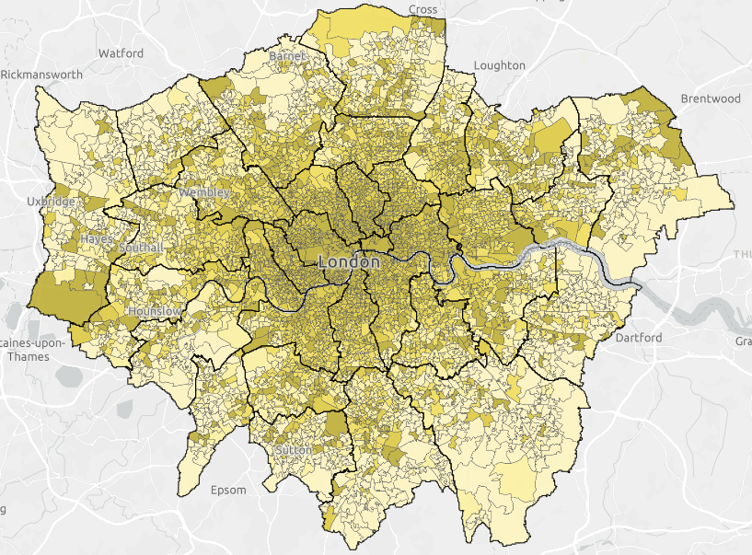
There is some good news on London’s air quality. Recent evidencesuggests that deaths attributable to air pollution fell by around 40% between 2019 and 2024. This shows that coordinated action can deliver measurable improvements to public health.
But air pollution remains a significant health risk, and it can also affect whether people feel able and willing to be active outdoors.
This matters because the people who could benefit most from physical activity can also be among those most affected by poor air quality. Children, older adults, people with long-term health conditions and communities experiencing greater inequalities can face both greater exposure to pollution and greater vulnerability to its effects.
Climate change could make the problem harder
Climate change adds another layer of risk. Higher temperatures are expected to increase some harmful pollutants, including ground-level ozone. Without further action, air pollution could contribute to an estimated 30,000–45,000 deaths each year in the UK by the 2050s.
Air pollution is also a concern for Londoners. Around 88% report being concerned about air pollution in their local area, with concern particularly high among younger people, parents, Black Londoners and people living in inner London.
The risks are not evenly distributed across the capital. Several inner London boroughs, including Tower Hamlets, Newham, Hackney, Camden, Westminster, Kensington and Chelsea, Lambeth and Southwark, experience higher levels of pollutants such as PM2.5 and nitrogen dioxide.
Many of these areas also have less green space, fewer trees, higher temperatures and higher levels of deprivation.
What does this mean for physical activity?
Physical activity remains one of the best ways to improve health. But when we exercise, we breathe more deeply and rapidly, which can increase the amount of pollution reaching our lungs.
Research suggests that walking, running and cycling near busy roads can increase exposure to harmful pollutants. Exercising in polluted environments can also contribute to airway inflammation, higher blood pressure, reduced lung function and poorer exercise performance.
Poor air quality can therefore create a difficult balance: we want people to be more active, but the environment in which they are active matters too.
For some people, this may discourage outdoor activity altogether. Older adults, people with long-term health conditions and people who are more vulnerable to pollution may be particularly likely to avoid exercising outside when air quality is poor.
Protecting London’s sporting future
Air quality could also become increasingly important to London’s sporting ambitions.
Major sporting events attract thousands of participants and spectators, while activities such as the London Marathon, RideLondon and community running events take place outdoors and across busy parts of the capital.
Poor air quality could affect participant welfare, event planning and London’s attractiveness as an international sporting destination. Lord Sebastian Coehas previously warned that air pollution could affect London’s ability to remain a leading sporting city.
What can the sport and physical activity sector do?
Improving air quality is not something that the sport and physical activity sector can solve alone. But it can play an important role in helping Londoners understand the risks and make informed choices about being active.
Evidence from Clean Air Day and Mums for Lungs suggests that the next phase of progress will depend not only on policy, but also on trusted organisations helping to make air pollution more relevant, understandable and actionable.
Organisations with established relationships in communities are well placed to translate complex health messages into simple, practical actions that support behaviour change.
This could include:
- Use local information to help participants understand when and where air quality is likely to be poorer.
- Adapt activities by considering the timing, location and intensity of activity when air pollution is high.
- Make better use of green space to provide shade and support healthier local environments.
- Support vulnerable groups by providing clear guidance for people who may be more affected by air pollution.
- Work across sectors by bringing together sport, health, education, local government and environmental organisations.
- Keep the message positive by focusing on how reducing pollution can create healthier places for people to be active, rather than discouraging outdoor activity.
London has already shown that progress is possible. The fall in pollution-related deaths demonstrates what coordinated action can achieve. However, the next challenge is to make sure that progress reaches every community, and that cleaner air becomes part of creating healthier, more active places for Londoners.