
Sport and Physical Activity help people to live healthier, happier and longer lives.
But, if we do not act, access to sport and physical activity in London is going to become increasingly stretched – and increasingly unfair.
On 1st June, London Sport published a new report that shows why this will happen, where it will happen, and what we need to do about it.
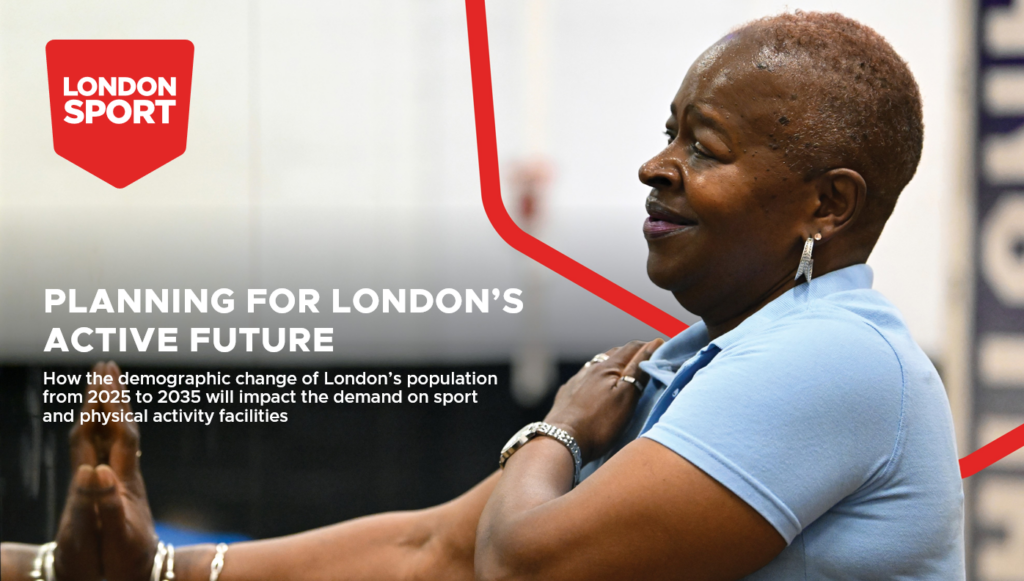
The increase that the GLA project for London equates to 400,000 people. More than the population of Leicester. This means facilities will be stretched between many more residents.
The number of Children and Young People in London is decreasing. It will fall by a further 10% between 2025 and 2035. Fewer children in London puts the facilities that were created especially for them at risk. London Council’s 2026 report into falling pupil numbers references 90 schools being closed or merged in the last 5 years.
The age group growing the fastest is those aged 65 plus. Those providing services or facilities to older adults will need to increase capacity by 25%, just to stand still. This group are also the most likely to have specific health needs.
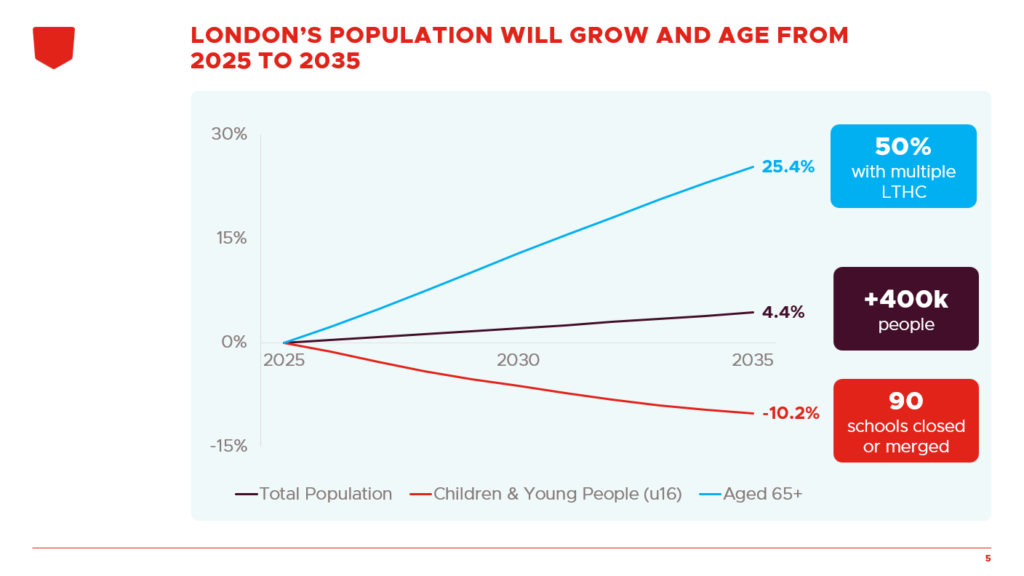
London’s population is changing. Sport and physical activity facilities will need to change too.
Havering, Tower Hamlets, Barking & Dagenham, Hillingdon and Newham are all growing much faster than the London average.
Tower Hamlets, Barking & Dagenham and Newham are also 3 of our 4 lowest ranked boroughs in London for Sport and Physical Activity facilities.
High numbers of additional people in these boroughs by 2035 will result in even greater inequality in provision of facilities across London.
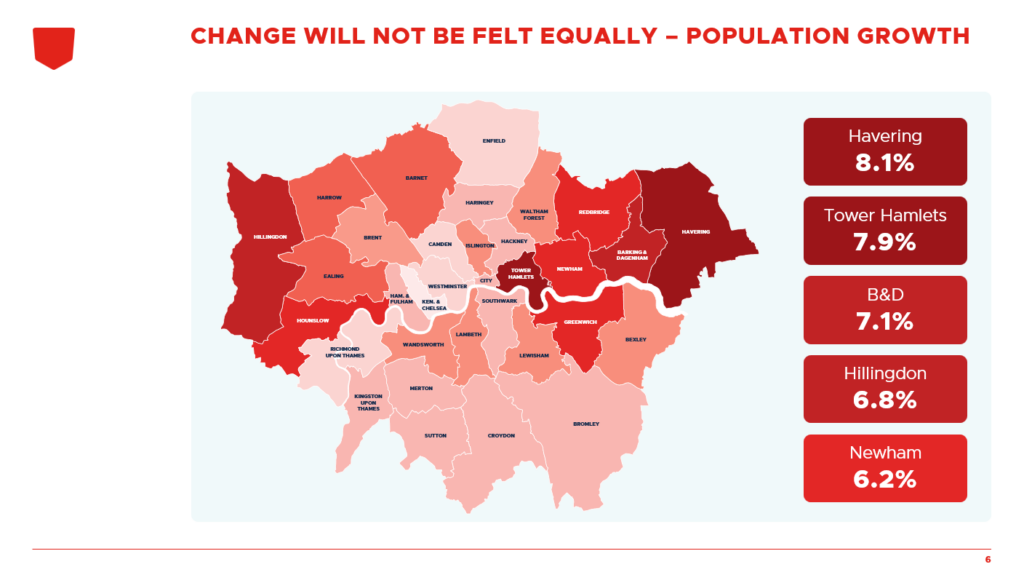
To understand what additional facilities will be needed, we combined Population Projections, Activity Behaviour, and existing Facility data. This allowed us to model what facility types would see the most increase in demand, based on projected activity demands from the projected future population.
At a London level, for provision to be no worse in 2035 than in 2025, we would need in excess of 70 more Health & Fitness Gyms, 60 more Sports Halls, and 50 more Studios.
It is no coincidence that these facilities provide many of the activities popular among older adults – such as Fitness Classes, Pilates, Yoga and Dance.In order to address the challenges that population change will bring, we need to:
1. Protect existing facilities
- Facilities must not be lost to short-term or localised pressures.
- The overall capacity needs to increase, not decrease.
2. Target investment where need will grow fastest
- Some of these boroughs are already among the most underserved for facilities.
- Demographic change will be felt most keenly in these places.
3. Expand capacity beyond new builds
- Meeting demand will require more than capital investment.
- Immediate gains can be made through increased utilisation of existing assets (such as School facilities), extended opening hours, and greater use of non-traditional spaces.
4. Plan for an ageing population
- Facility design, Programmes, Welfare Support, and Workforce Capability must adapt to meet the needs of a rapidly growing older population.
- Ensuring that new facilities are flexible, both in terms of the range of possible activities, and also flexible access requirements, will help to future proof provision.
5. Take a whole-system approach
- We need a joint strategy that aligns resource to effectively focus on key challenges.
- This would involve:
- Workforce planning and development
- Health and Care integration
- Education and school estate planning
- Local, GLA and National Government
Full details of our analysis, at a borough level, are available in the full project report.