
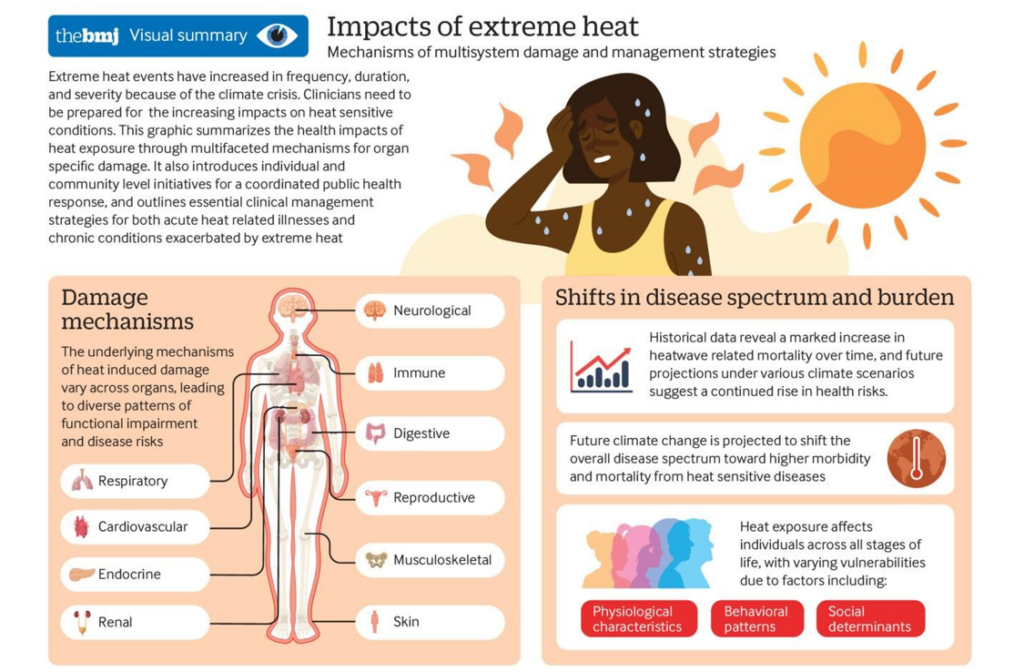
As we’ve explored, London is becoming hotter as climate change, urban development and air pollution intensify the effects of heat. But what does hotter weather actually do to our bodies?
Even without exercise, prolonged exposure to extreme heat places extra strain on the body, increasing the risk of heat-related illness and affecting the cardiovascular, respiratory, renal and immune systems. During severe heatwaves, the risk of heat-related deaths also rises.
Physical activity places even greater demands on the body. Exercising in hot conditions increases the risk of heat stress, placing additional strain on the heart, lungs and the body’s natural cooling system. Heat stress is not limited to outdoor sport; poorly ventilated sports halls and gyms without adequate cooling can also become dangerously hot.
Although the body can adapt by becoming more efficient at cooling itself through increased sweating and improved blood circulation, this process typically takes around two weeks – longer than many heatwaves. High humidity makes matters worse by preventing sweat from evaporating efficiently, reducing the body’s ability to cool itself.
If the body can no longer regulate its core temperature, overheating can quickly become a medical emergency. Heat exhaustion, heat cramps, collapse, hyperthermia and life-threatening heat stroke can all occur. Even well-trained athletes can become vulnerable to extreme heat.
Extreme heat affects more than athletes. Officials, volunteers, spectators and coaches are also exposed to thermal stress during outdoor events. Longer periods in the sun increase exposure to ultraviolet (UV) radiation, raising the risk of skin damage, cataracts and skin cancer. Climate change is also increasing pollen levels and allergen potency, which may worsen respiratory conditions such as asthma and hay fever.
As our climate changes, sport and physical activity will need to adapt. This may include scheduling activities during cooler parts of the day, reviewing competition calendars, improving ventilation and cooling within sports facilities, introducing heat policies and providing greater access to shade and drinking water. Some sports may also need to reconsider how facilities are designed and managed to remain safe during hotter summers.
Most people taking part in sport are not elite athletes and do not have access to dedicated medical teams or specialist support. Building greater awareness among participants, coaches and organisations about the health risks of exercising in extreme heat – and how to adapt safely – will become increasingly important as London continues to warm.