
Growing concern about the future
Climate change is becoming a growing concern for the public, with potential implications for people’s ability to spend time outdoors and stay physically active.
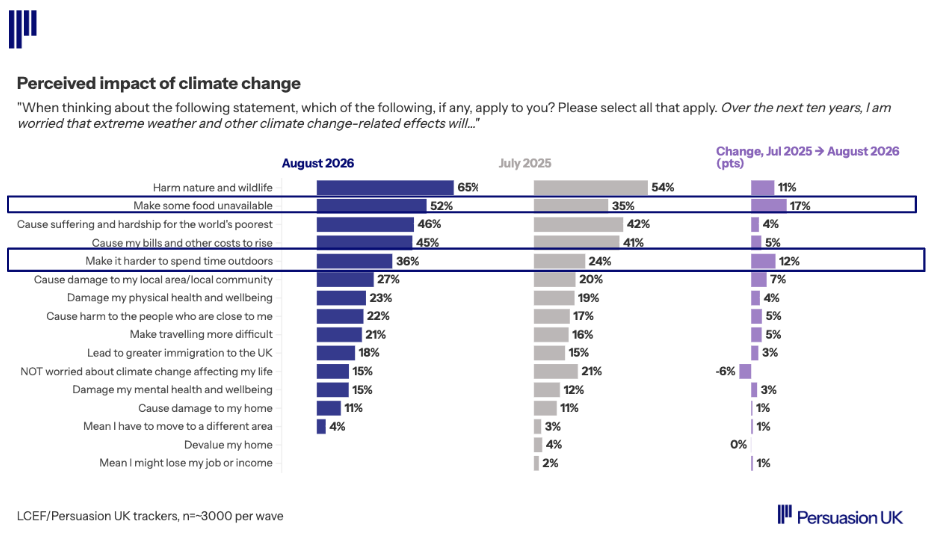
In London Sport’s 2024 Opinium poll of 2,000 UK adults, 52% of respondents identified climate change as a significant concern for the future. More recently, a Persuasion UK poll of 3,000 adults found a 12 percentage-point increase in concern that climate change would make it harder to spend time outdoors compared with the previous year. This was the second-largest increase among the concerns measured, behind the 17 percentage-point rise in concern that some foods could become unavailable.
These findings suggest that people are increasingly worried about how climate change could affect their everyday lives over the next ten years. For the sport sector, this raises an important question: how might these concerns affect people’s opportunities to be active outdoors in the future?
From concern to action
After years of campaigning and raising awareness, the effects of climate change may be becoming harder for people to ignore. Experiences of extreme heat and other climate-related events can bring the issue closer to home, helping people recognise how changing weather conditions could affect their local areas and everyday activities.
Growing concern may also create greater support for action. Persuasion UK‘s findings suggest that people increasingly recognise the potential cost of doing nothing about climate change compared with taking steps to address it.
However, public concern does not automatically translate into action. People may have different views about which policies are needed, who should be responsible and how the costs and benefits of climate action should be shared.
For the sport sector, this presents both a challenge and an opportunity. Sport organisations may be well placed to help deliver climate-related initiatives in their communities, but they need to consider how to engage people with different priorities and opinions.
Finding common ground
How can we turn growing concern about climate change into action that benefits both people and the environment?
Persuasion UK‘s findings suggest that there is a strong public appetite for adaptation, particularly when people can see clear benefits for themselves as well as the environment.
This points to an important opportunity: climate action does not always need to be presented as a choice between protecting the environment and meeting people’s everyday needs. Instead, we can focus on solutions that do both.
Within sport, this could mean making outdoor spaces more comfortable during hot weather, improving access to shade and greener spaces, or helping communities maintain opportunities to be active when extreme weather disrupts their usual routines.
These approaches can make climate adaptation more relevant to people’s lives. They can also help bring communities together around shared priorities, such as health, wellbeing and access to local spaces, even when people have different views about climate change itself.
It is also important to recognise that people of different ages and backgrounds may experience climate change differently. Understanding these differences can help the sport sector develop messages and solutions that reflect local needs, rather than assuming that one approach will work for everyone.
Bringing climate action to life through sport
Policies are important, but they can only go so far on their own. People also need to see how those policies translate into practical improvements in their communities.
As explored in our previous article, Designing for a hotter London, responding to climate change requires a coordinated approach. This means bringing together sports organisations, local authorities, community groups and other partners to turn plans into action.
Grassroots sport could play a valuable role in this process by helping communities identify local challenges, explore practical solutions and understand the benefits of adapting to a changing climate.
The opportunity is to move beyond raising awareness and towards action that people can see and experience in their everyday lives.
By focusing on shared benefits and working with communities, the sport sector can help make climate action more relevant, inclusive and achievable, while protecting people’s opportunities to stay active in the years ahead.