
The summer of 2026 has given us a glimpse of what future summers could look like. But extreme heat is not simply about temperatures becoming uncomfortable.
It is a disruptor. Heat is different from many of the weather hazards we are used to planning for. A storm or flood can cause significant damage, but its impacts are often more geographically concentrated.
Extreme heat can affect much larger areas at the same time. It can affect our health, homes, workplaces, transport, energy systems, water supplies and public services simultaneously.
And heat can make other problems worse. It can increase the effects of air pollution and drought, creating a combination of pressures that can ripple across different parts of society.
This makes extreme heat a particularly difficult risk to manage. There is another challenge emerging in London: how do we cool ourselves without making the problem worse?
The Cooling Roadmap for London highlights that cooling in buildings is not currently the norm. At the same time, rising housing and energy costs, the cost-of-living crisis and pressure on public finances make it difficult to assume that everyone will simply be able to rely on active cooling.
This raises the prospect of what has been described as cooling poverty — where some people can afford to keep cool while others cannot. But there is a further issue. Air conditioning moves heat and does not make it disappear.
The heat removed from the inside of a building has to go somewhere, creating additional heat in the surrounding environment. If active cooling becomes widespread without considering the wider urban environment, there is a risk of shifting heat from one place to another.
Add this to the urban heat island effect and periods of persistent high pressure, and the places around us could become increasingly difficult to cool.
That has implications for physical activity. Because when we talk about heat resilience, we often focus on keeping people cool indoors. But what about the places where people go to be active such as playgrounds, parks, and streets?
This creates an interesting challenge for the sport and physical activity sector. Could a facility designed to support physical activity inadvertently make its surrounding environment hotter? That is a question worth asking as we think about future investment and facility design.
There is another complication. We often assume that if it is too hot during the day, people can simply exercise earlier in the morning or later in the evening.
But that assumption may not hold in a warmer future. The Met Office describes tropical nights as nights when temperatures remain at or above 20°C. These warmer nights can make it harder for the body to cool down and recover, particularly when they occur repeatedly.
So moving activity to the early morning may not provide the same relief it once did. And exercising later in the evening brings its own considerations.
Some people may be reluctant to exercise when it is dark. Others may feel less safe exercising alone. Our own research with Opinium in 2023 found that around half of Londoners felt unsafe exercising alone at night, with women less likely to feel safe. The same research found that perceived safety improved when people exercised as part of a group.
The time of day when conditions are cooler may not necessarily be the time when people feel comfortable, safe or able to be active. And heat is not the only climate pressure changing the conditions for physical activity. Our seasons are becoming less predictable.
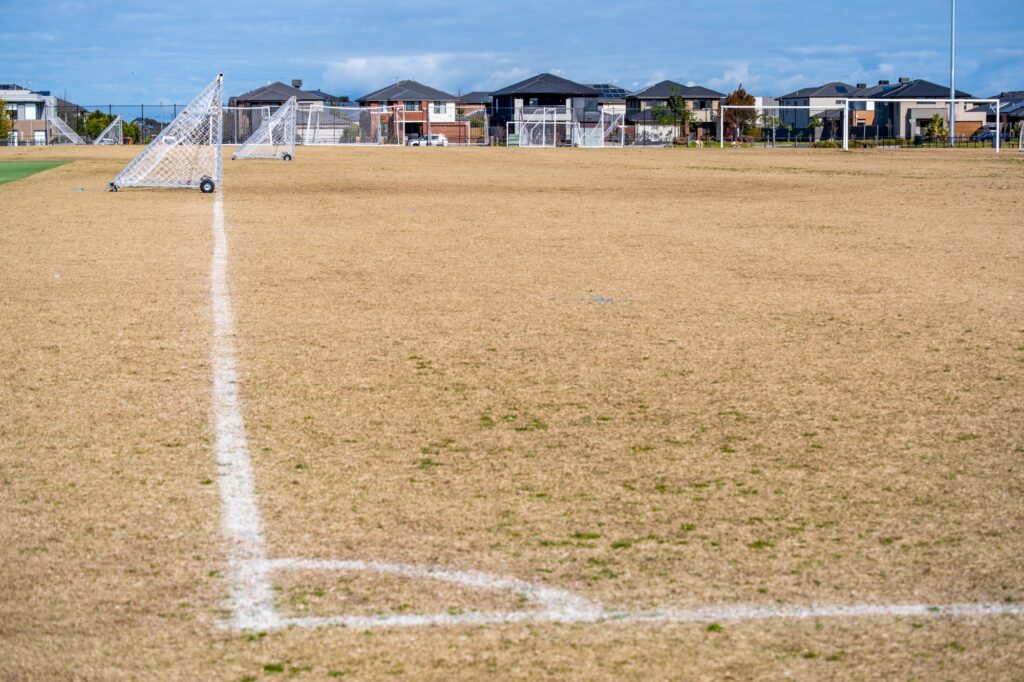
Wetter and stormier winters can leave grass pitches waterlogged. Hotter summers can create different pressures on playing surfaces, facilities and the people using them.
The boundaries between seasons are becoming less reliable. A pitch may be too wet to use in one period and too dry in another. An outdoor activity may be comfortable one week and unsafe the next.
For community sport, these changes can have consequences beyond a single cancelled session. If poor conditions repeatedly disrupt fixtures and training, people may stop attending. Clubs can lose members. Volunteers can become stretched. Community organisations can become less viable.
Sport England has warned that climate change poses a serious threat to sport and physical activity, with extreme weather already affecting facilities and participation. The question, therefore, is not simply whether climate change will affect sport. It already is.
The harder question is how behaviour will change as these disruptions become more frequent and less predictable. For example, research from the University of Sherbrooke has explored how extreme weather and changing seasonality could affect physical activity among older adults. This is particularly important because older adults can already face challenges in reaching recommended levels of physical activity, while extreme weather can create another barrier to participation.
For a city such as London, understanding this matters. London has a large and growing older population, while birth rates have fallen in recent years. Different generations may therefore experience and respond to a changing climate in different ways. We need to understand these behavioural changes better, such as which activities people will stop doing, which will move indoors and whether participation become more dependent on facilities that can provide a comfortable environment.
These are not questions that can be answered simply by looking backwards. Much of the data we use to understand physical activity tells us what has already happened. For example, surveys such as Sport England’s Active Lives provide an important picture of participation trends over time. But historical trends cannot, on their own, tell us exactly how people will respond to a climate that is changing the conditions in which they live and exercise.
If we only measure what happened yesterday, we risk preparing for yesterday’s problems. We need to start looking further ahead. We need better understanding of the micro- and macro-trends linking climate, place, behaviour and physical activity.
It means thinking differently about the future — and making decisions today that allow our places, facilities and communities to remain active in a warmer world.