
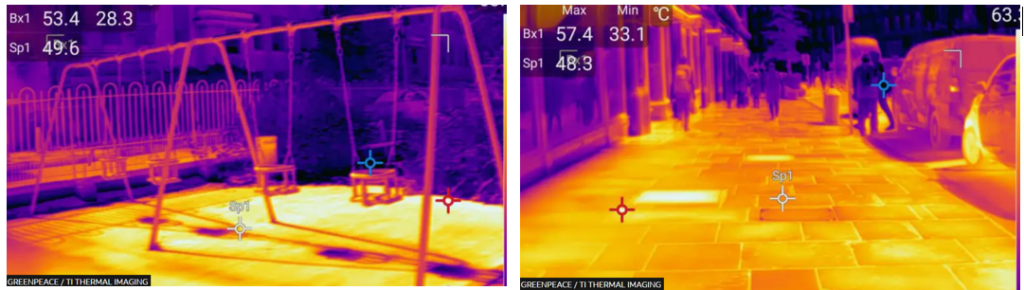
Hotter weather doesn’t just warm the air – it also makes the surfaces around us much hotter.
During the recent UK heatwave, a BBC investigation using thermal imaging commissioned by Greenpeace found that, at 5pm, ground surface temperatures reached 56°C in Piccadilly Circus and 65°C in Holborn, while the air temperature in London was around 35°C.
Children’s playgrounds can become particularly hazardous. In one Islington playground, rubber safety surfacing and metal play equipment reached temperatures of 53°C. These findings do not include school playgrounds or other outdoor exercise equipment, such as metal gym stations and calisthenics bars, which may also become dangerously hot during extreme heat.
Children are especially vulnerable because their bodies are less able to regulate heat than adults, making them more susceptible to heat stress and heat-related illness. Older adults, disabled people and those living with long-term health conditions are also at greater risk.
The impacts are not experienced equally. Communities living in more deprived neighbourhoods may have fewer opportunities to access shaded green spaces or climate-resilient play and sports facilities, increasing the risk of climate injustice.
Extreme heat also affects sports facilities. Research shows that synthetic grass pitches consistently reach higher surface temperatures than natural grass, increasing thermal stress for players, coaches and officials during hot weather.
Natural grass pitches are not immune either. Hotter, drier summers increase water evaporation, place greater pressure on irrigation and challenge traditional grass varieties. As turf dries out and becomes harder, pitches provide less natural cushioning, potentially increasing impact forces and the risk of injury.
As London continues to warm, we need to rethink how people exercise and play safely. Providing more shade, planting trees, using cooler surface materials and adapting sports facilities will all help make physical activity safer during periods of extreme heat.
People may also need greater flexibility in how and where they are active. On particularly hot days, choosing shaded routes for walking or running, swimming indoors, or exercising during cooler parts of the day can help people remain active while reducing exposure to extreme heat.