
The latest Sport England ‘Social Value of Sport and Physical Activity – Year Two’ report highlights the significant contribution that sport and physical activity make to the wellbeing of children and young people (CYP), alongside clear evidence of where inequalities continue to limit impact.
Key points for children and young people:
- £14.1 billion of annual social value is generated through wellbeing benefits for CYP (aged 7-16), reflecting the strong relationship between being active and life satisfaction at a young age.
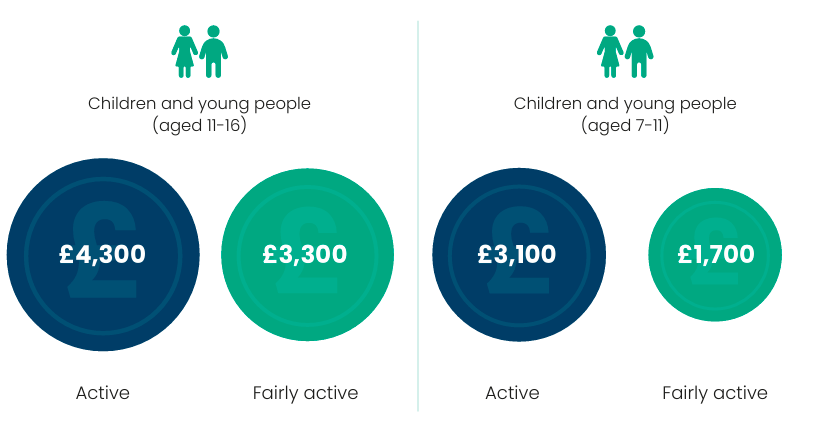
- Being active is worth an average of £4.3k per year in wellbeing value for young people aged 11-16, higher than the equivalent value for adults, underlining the long‑term importance of early engagement.
- A clear wellbeing gap exists, children aged 11-16 with two or more characteristics of inequality receive only £2.3k per year in wellbeing value when active (compared to £3.4k for those with no characteristics).
- If participation levels, quality of experience and wellbeing benefits for disadvantaged children matched those of their peers, an additional £1.4 billion of social value could be generated each year.
Why this matters:
The evidence reinforces that sport and physical activity deliver especially high wellbeing returns in childhood, but these benefits are not shared equally. Targeted investment that improves both access and the quality of experiences for less advantaged young people is critical to closing the wellbeing gap and unlocking substantial unrealised social value.